
Historic W.L. Walker Products
For 100 years, W.L. Walker has developed equipment around the practical needs of petroleum measurement. Looking back shows not a collection of obsolete products, but a century of improvement in how those same measurement problems are solved.
The Work Has Stayed Familiar. The Equipment Has Kept Improving.
Gaugers still sample tanks, determine temperature, measure liquid levels, and test petroleum for sediment and water.
What has changed are the materials, manufacturing methods, electronics, calibration practices, and tools available to perform that work with greater consistency and lower uncertainty.
Walker's historic products offer a useful look at where today's equipment came from — and how it continues to evolve.
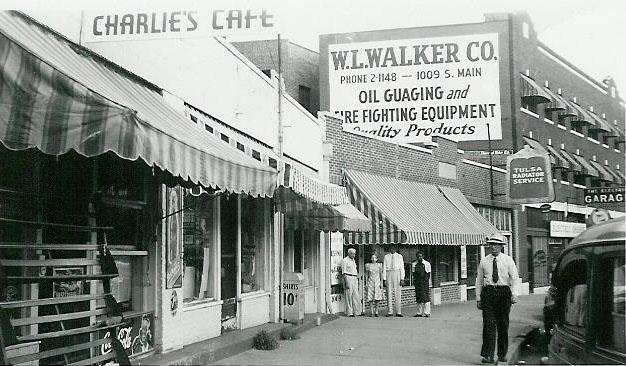
A Century of Improvement
Some measurement methods changed dramatically. Others proved so effective that improvement came through better materials, manufacturing, calibration, and consistency.
The Early Tulsa Oil Thief
The Tulsa Oil Thief was developed around a problem familiar to petroleum gaugers: obtaining a representative sample from a tank safely and consistently.
The Tulsa Oil Thief Today
The concept endured, while materials, machining, seals, manufacturing control, and available configurations continued to improve.
We will be taking a closer look at the evolution of the Tulsa Oil Thief in a future story from the Walker archives.
See Today's Tulsa Oil ThiefEarly Portable Centrifuges
Early Walker portable electric centrifuges were designed around the vehicles available to petroleum field personnel. Many early units operated on 6 volts because American cars and trucks of the period commonly used 6-volt electrical systems.
Modern Petroleum Centrifuges
As vehicle electrical systems changed, so did the equipment. Modern Walker centrifuges use contemporary power systems, heating methods, controls, and manufacturing practices while continuing to perform the same essential sediment and water testing.
The evolution from early 6-volt machines to today's centrifuges deserves a story of its own.
Explore Today's CentrifugesA Tool That Did Not Need Reinventing
The basic petroleum gauging tape has changed surprisingly little. A properly made tape and bob remain an effective way to manually determine liquid level.
Greater Consistency, Lower Uncertainty
The important improvements have come in how the equipment is made. Better production controls, materials, inspection, and manufacturing consistency help reduce variation from one instrument to the next.
Sometimes progress means replacing a technology. Sometimes it means becoming much better at producing a tool that already works.
See Today's Gauging TapesFrom Glass Thermometers
For generations, petroleum temperature measurement relied heavily on glass thermometers mounted in protective wooden or metal assemblies and lowered into a tank.
Toward Digital Temperature Measurement
Today, digital instruments and electronic probes can provide faster readings, improved resolution, and more repeatable temperature measurement.
Truck-mounted Walker probe systems are also being used more often in applications where personnel once relied on traditional wood-backed glass thermometers.
That transition from glass instruments to electronic temperature measurement will be another story we explore in greater detail.
Explore Today's Digital ThermometersExplore the 1952 W.L. Walker Catalog
The catalog offers a snapshot of petroleum measurement equipment more than 70 years ago and makes it possible to see both how much has changed — and how recognizable some of the work remains.
View the 1952 Catalog