
100 Years of Practical Petroleum Measurement
Since 1926, W.L. Walker Company has grown from a Tulsa safety equipment business into a fourth-generation American manufacturer of petroleum measurement, sampling, gauging, laboratory, and temperature measurement equipment.
Designed Around the Work of the Gauger
W.L. Walker Company's history is a story of practical problem solving. From William Lee Walker's early mechanical work and patented oil gauging equipment to the Tulsa Oil Thief™ , Lufkin oil gauging tapes , petroleum centrifuges, hydrometers, electronic temperature measurement, and modern petroleum sampling systems, Walker has spent generations supplying and developing equipment around the practical work of the petroleum gauger.
Four generations later, the company remains family-owned and headquartered in Tulsa, Oklahoma.
Explore Walker Products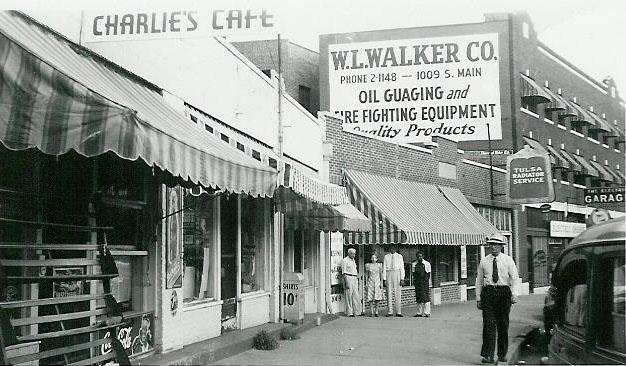
Before 1926
William Lee Walker's path to petroleum equipment began years before the company that would eventually bear his name.
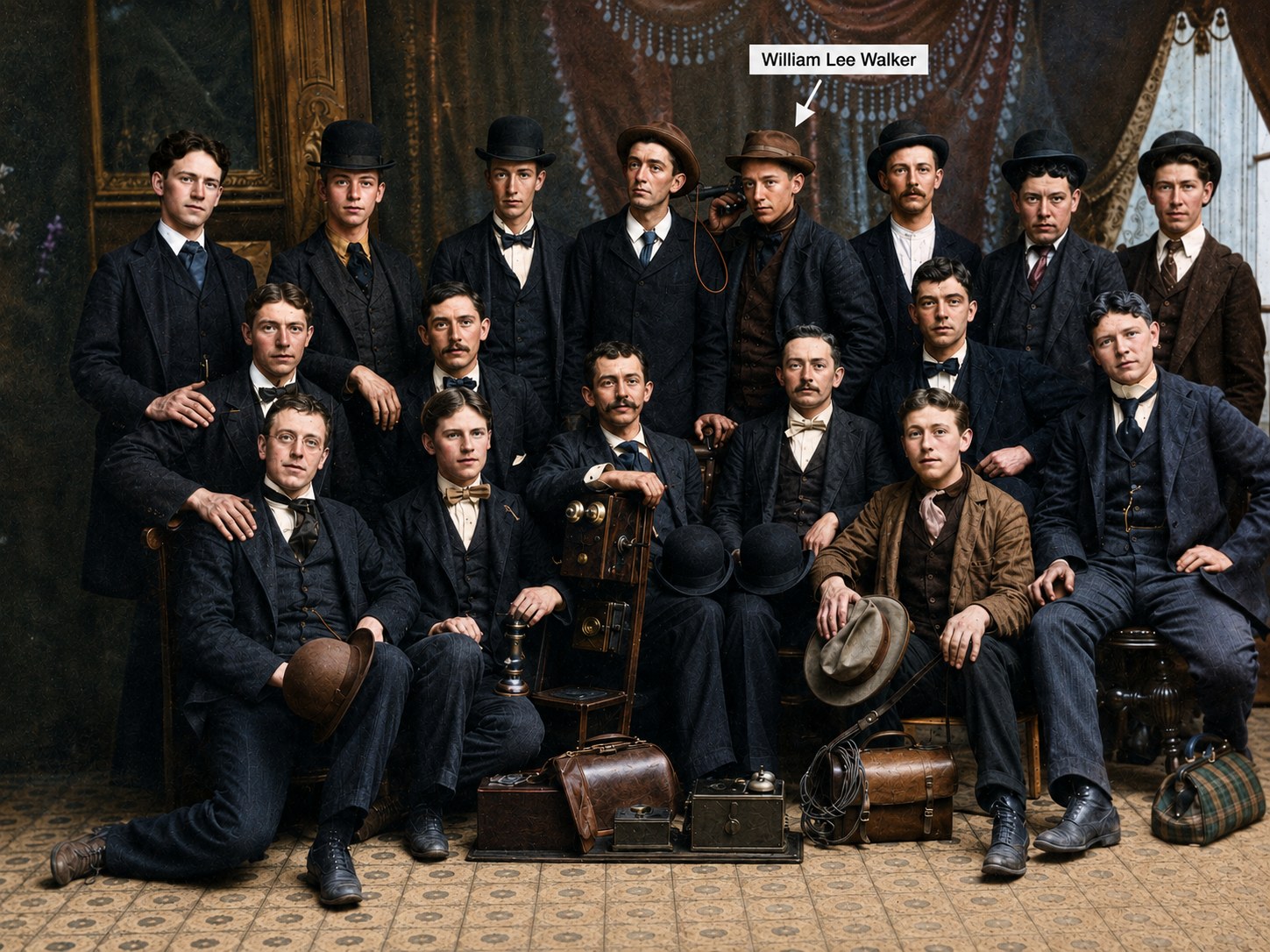
Telephone Work
As a young man, William Lee Walker worked in telephone installation and testing in Philadelphia. The work gave him early experience with electrical equipment, troubleshooting, installation, and practical mechanical systems.

Standard Steel Car Company
By January 1909, William Lee Walker was working in the Machine Department of Standard Steel Car Company in Indiana, gaining hands-on experience in an industrial manufacturing environment.
Following the Oil Boom West
William Lee Walker came from Butler County, Pennsylvania, where the rise of the American oil industry was already part of the world around him. As the oil business moved west, so did Walker.
Along the way he found both opportunity and family, eventually making his way to Oklahoma, where his mechanical experience and growing knowledge of petroleum production would help shape the company he founded in Tulsa in 1926.
Managing a Gas Production Plant
William Lee Walker served as manager of a gas production plant in Chelsea, Oklahoma. The Walker family lived on site at the plant, making petroleum production part of their daily life.
His son, Arthur L. Walker, was born there in 1917, at the gas plant where the family was living and William Lee was working.
W.L. Walker Company Begins
In 1926, William Lee Walker left the gas-production business, obtained financing, and established W.L. Walker Company in Tulsa.
Fire Protection, Safety & Industrial Equipment
Walker's earliest business served the safety and industrial needs of Oklahoma's rapidly growing petroleum industry.
Oil-Fire Equipment
Early W.L. Walker business included foam-generating and fire-protection equipment used around oil production, storage, and industrial facilities.
Decades in Industrial Fire Protection
Walker represented Walter Kidde for many decades and supplied specialized firefighting and fire-protection equipment alongside petroleum measurement equipment that was becoming an increasingly important part of the business.
Petroleum Measurement Takes Center Stage
Over time, oil gauging, petroleum sampling, laboratory equipment, hydrometers, thermometers, centrifuges, and other measurement instruments became the work for which W.L. Walker was best known.
Improving the Oil Thief
Experience in petroleum production exposed William Lee Walker to the shortcomings of the sampling devices then being used in the field.
A Better Way to Take a Tank Sample
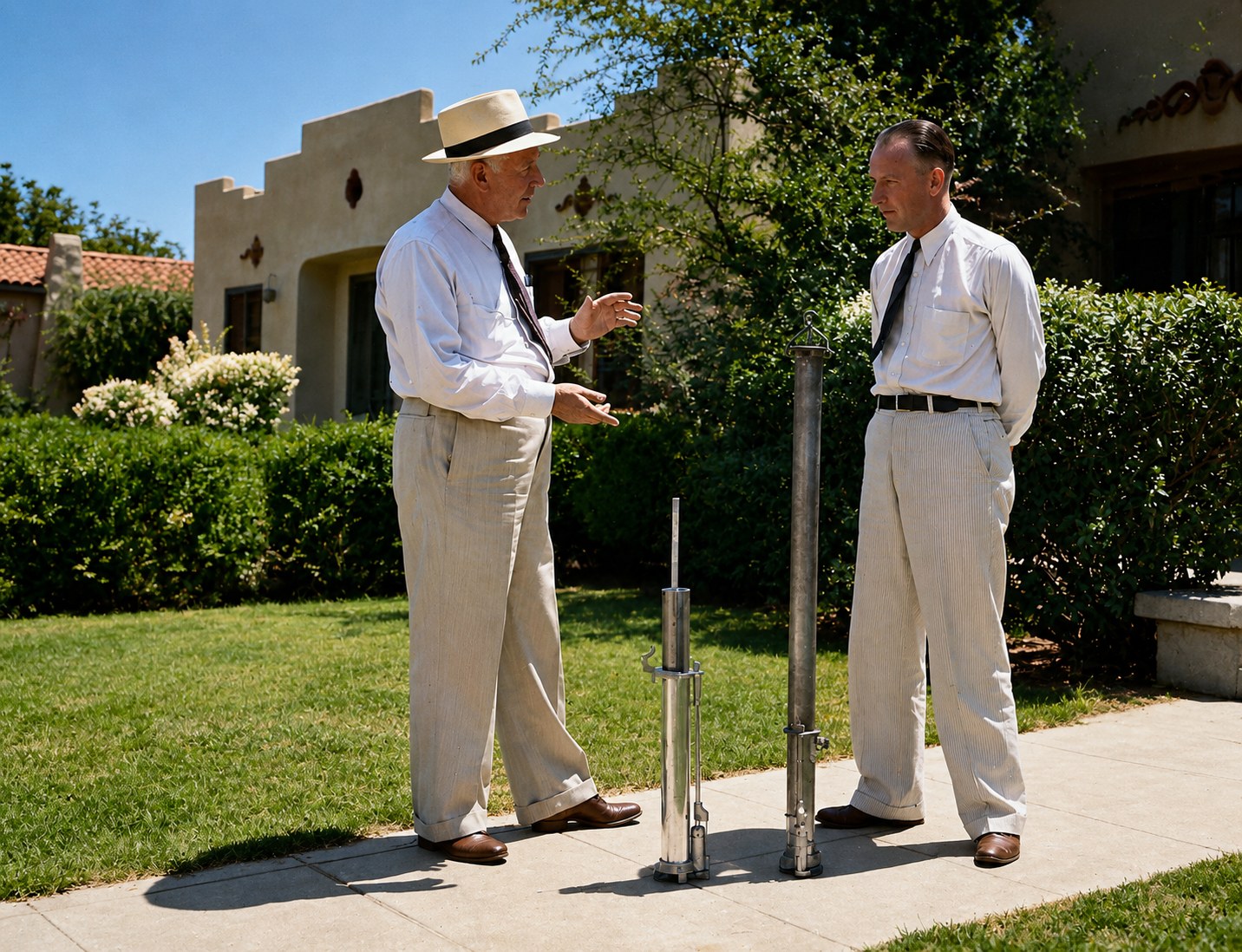
Existing oil thieves could be awkward to operate and susceptible to wear during field service. William Lee Walker set out to improve the design.
Walker's design introduced a single-trip mechanism that eliminated the troublesome two-rope or two-chain arrangement used by earlier samplers.
The design also incorporated a rotating valve arrangement intended to reduce scoring caused by sand and other particles, especially during bottom sampling.
The result became the Tulsa Oil Thief™ , one of the products most closely associated with the Walker name.
Explore Tulsa Oil Thief™ SamplersA Match Made in Heaven: The Walker Gauge Line + Lufkin Oil Gauging Tape
William Lee Walker's early petroleum measurement work extended beyond sampling equipment. In the 1930s, he patented a gauger's tape reel designed for use with a Lufkin oil gauging tape blade.
The pairing proved to be a natural fit: Walker's gauge line, gauging reel, and related field hardware combined with Lufkin oil gauging tape to create a practical manual tank gauging system for petroleum gaugers.
That relationship became part of Walker's broader line of oil gauging equipment, including gauging reels, plumb bobs, and other tools used in manual petroleum tank measurement.
For more information about selecting the correct tape for field applications, see our guide to choosing the right Lufkin oil gauging tape .
Shop Lufkin Oil Gauging TapesA Company on the Move
W.L. Walker has spent nearly its entire history in downtown Tulsa, occupying several locations as the company and the city grew around it.
South Cincinnati & Downtown Offices
Early W.L. Walker operations included space in the 300 block of South Cincinnati, followed by locations in the Alexander Building and what later became the ATCO Building near Sixth and Main.
Eighth & Main and Tenth & Main
As Walker's business expanded, the company continued moving through downtown Tulsa, including locations at Eighth and Main and later Tenth and Main.
1009–1011 South Main
In 1941, William Lee Walker purchased the building at 1009–1011 South Main, creating a long-term home for the company in downtown Tulsa.
330 N. Boulder Avenue
From 2010 through 2025, W.L. Walker Company operated from 330 N. Boulder Avenue in downtown Tulsa.
During those years, Walker continued developing its manufacturing, petroleum measurement, service, and technical capabilities while the surrounding area experienced significant redevelopment.
Back to 1009 South Main
In 2025, W.L. Walker Company returned to its historic South Main location, reconnecting the fourth generation with the property William Lee Walker purchased in 1941.
Today, manufacturing, technical support, customer service, and company operations are once again based at one of the addresses most closely associated with Walker's history in downtown Tulsa.
Contact W.L. WalkerArthur L. Walker
The second generation of Walker leadership was shaped by military training, World War II, and a sudden transition at the family company.

Arthur L. Walker & Military Service
Arthur L. Walker's military background spanned a decade, beginning with his attendance at Oklahoma Military Academy from 1935 through 1937 and continuing through his wartime service in the U.S. Army.
During World War II, Art remained in Army service from 1941 through 1945 and ultimately attained the rank of Major.
According to Walker family history, Art had been scheduled for discharge following a serious automobile accident, with his discharge expected on December 8, 1941. The attack on Pearl Harbor on December 7 changed those plans, and he remained in military service through the war.
He returned home in late 1945.
Art Walker Comes Home
Art returned from military service in November 1945 and came back to a family business facing a difficult transition.
William Lee Walker had been ill, and Art immediately became involved in strengthening company operations while helping begin a new period of petroleum equipment development.
William Lee Walker passed away in November 1946, leaving Art to carry W.L. Walker into its second generation.
Developing Equipment for Field Measurement
Under Art Walker, product development accelerated around the practical needs of petroleum gaugers and measurement personnel.
More Practical Field Centrifuges
Walker developed increasingly compact petroleum centrifuges that could be used in vehicles and field environments, making BS&W determination more practical outside a conventional laboratory.
That work became part of Walker's long involvement with equipment used for sediment-and-water testing in crude oil.
Listening to the Gauger
Art Walker credited chief gaugers and operating personnel from major pipeline companies with suggesting equipment ideas and improvements.
Their field experience helped shape Walker oil gauging equipment, petroleum sampling tools, centrifuges, hydrometer accessories, and other products used in petroleum measurement.
Building Specialized Petroleum Equipment
Walker continued refining its manufacturing methods and product designs as petroleum measurement requirements evolved, with an emphasis on durable equipment made for repeated field use.
Art Walker and Art McElroy
Tulsa's manufacturing community played an important role in the development of specialized petroleum equipment during the mid-twentieth century.
Friends, Engineers & Tulsa Manufacturers
Art Walker and Art McElroy were close friends who collaborated on numerous engineering and manufacturing projects.
Their work included centrifuge development, specialized petroleum equipment, improvements to field accessories, and other practical manufacturing challenges.
The relationship reflected a broader Tulsa manufacturing culture in which inventors, engineers, machinists, and petroleum equipment companies frequently worked together to solve specialized industrial problems.
Visit McElroy ManufacturingExplore a Century of W.L. Walker Product History
Original Walker literature documents generations of petroleum measurement equipment, including oil gauging tools, field centrifuges, hydrometer cases, samplers, control equipment, thermometers, and other specialized products.
Browse historic catalogs, advertisements, technical sheets, drawings, photographs, and product stories from across generations of W.L. Walker.
Expanding Walker's Petroleum Measurement Business
By the 1950s, Walker had developed an increasingly broad line of equipment for oil gauging, petroleum sampling, laboratory testing, temperature determination, and field measurement.
Building a Complete Petroleum Measurement Line
By the 1950s, W.L. Walker was offering an increasingly broad range of equipment for petroleum gauging, sampling, laboratory testing, temperature measurement, and field use.
Period Walker catalogs show the company developing into a more complete source for equipment used by petroleum gaugers and measurement personnel.
View the 1952 W.L. Walker CatalogExpanding Manufacturing Capability
As Walker's petroleum measurement line expanded, so did the company's manufacturing capabilities. Conventional machining was joined over time by CNC equipment, modern production machinery, and robotic systems that help improve consistency, efficiency, and production capacity.
These investments allow Walker to combine nearly a century of practical product knowledge with modern manufacturing technology while maintaining direct control over the quality of many of the specialized petroleum measurement products it builds in Tulsa.
The People Behind the Products
W.L. Walker's history is not only the story of four generations of one family. It is also the story of employees who have spent decades building, improving, servicing, and supporting Walker petroleum measurement equipment.
James Acton, for example, has been with W.L. Walker for 49 years, while many other members of the Walker team have served the company for more than 25 years.
That continuity preserves something difficult to replace: generations of practical knowledge about how petroleum measurement equipment is built, how it is used in the field, and how it can be improved.
Anne Walker Brackett
The third generation brought continued modernization of Walker manufacturing along with deeper involvement in petroleum measurement standards and industry education.
Anne Walker Brackett Takes Leadership
Leadership passed to Art Walker's daughter, Anne Walker Brackett, continuing the family company's third generation.
During Anne's leadership, Walker continued modernizing its manufacturing operations, including expanded use of CNC machining and increasingly advanced production methods.
Anne also became deeply involved in petroleum measurement standards and education. Her work included decades of participation in the American Petroleum Institute's Manual of Petroleum Measurement Standards , including more than twenty years of leadership in Chapter 7 work involving temperature determination.
Her industry service also included ASTM standards activity and long-standing involvement with the International School of Hydrocarbon Measurement through committee work and instruction.
PETs & DCTs
Walker expanded into Portable Electronic Thermometers and Digital Contact Thermometers as petroleum temperature measurement moved toward electronic instruments.
CNC Manufacturing
Continued investment in CNC machining improved repeatability, production efficiency, and Walker's ability to manufacture specialized petroleum measurement components with greater control over consistency and quality.
Electronic Petroleum Measurement
Walker's product line continued evolving beyond purely mechanical equipment into electronic petroleum temperature and tank measurement applications.
A Continuing Engineering Tradition
From William Lee Walker's early gauging equipment to current developments in tape verification, manual tank gauging, and temperature measurement, patented ideas have remained part of W.L. Walker's engineering tradition across generations.
Patent Awarded
Patent Awarded
Patent Awarded
Patent Awarded
Patent Awarded
Patent Application Pending
Patent Application Pending
Patent Application Pending
Patent Application Pending
Continuing the Family Business
Nearly a century after William Lee Walker opened the company, leadership passed to his great-grandson.
John Brackett Takes the Lead
In 2018, leadership of W.L. Walker Company passed to John Brackett, Anne Walker Brackett's son and William Lee Walker's great-grandson.
The fourth generation continues Walker's emphasis on manufacturing, petroleum measurement, technical support, product development, and preserving the practical knowledge accumulated across generations.
John has continued the family's work with the American Petroleum Institute and API MPMS , including committee leadership and technical participation involving temperature determination, sediment and water, sampling, and petroleum quantity measurement.
He has also remained active with the International School of Hydrocarbon Measurement , continuing Walker's longstanding connection to industry education and the exchange of practical measurement knowledge.
Petroleum Measurement Equipment
Walker continues manufacturing and supplying Lufkin oil gauging tapes, gauging reels, plumb bobs, thermometers, petroleum centrifuges, Tulsa Oil Thief™ samplers, hydrometer equipment, cases, and specialized petroleum measurement products.
View Petroleum Measurement ProductsService, Repair & Calibration
Walker supports petroleum measurement equipment after the sale through replacement parts, repairs, calibration services, certification support, and practical product knowledge.
Contact WalkerPreserving a Century of Product History
Historic literature, catalogs, drawings, photographs, patents, and family records preserve how Walker petroleum measurement products developed alongside the industry.
Explore the W.L. Walker ArchivesStill Building Equipment for the Gauger.
The tools, materials, manufacturing methods, and measurement technologies have changed enormously since William Lee Walker established the company in 1926.
The basic idea has not: listen to the people doing the work, understand the problem, and build dependable petroleum measurement equipment to solve it.
One hundred years later, W.L. Walker Company continues that tradition as a fourth-generation family-owned American manufacturer in Tulsa, Oklahoma.
Explore W.L. Walker Products